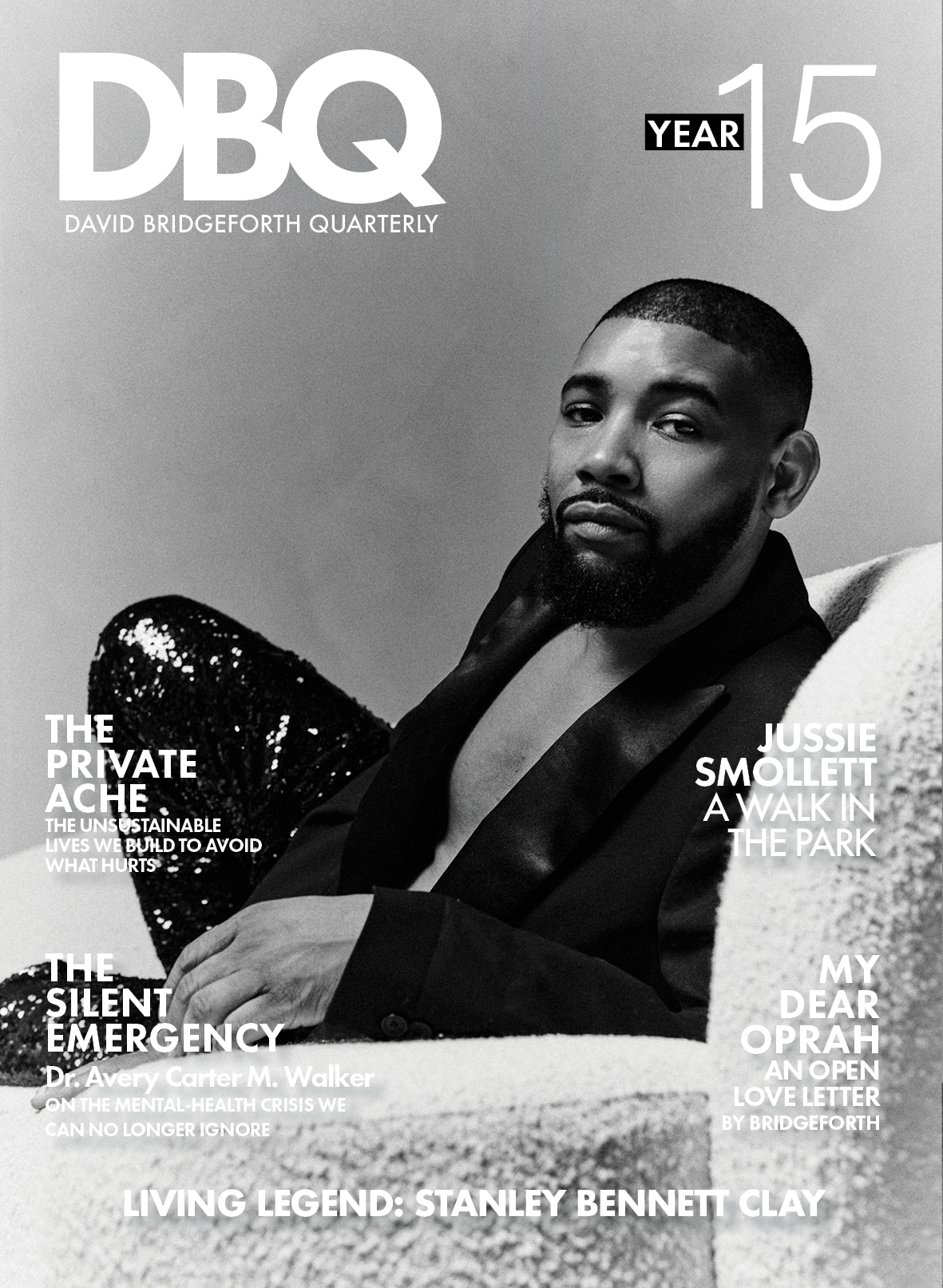
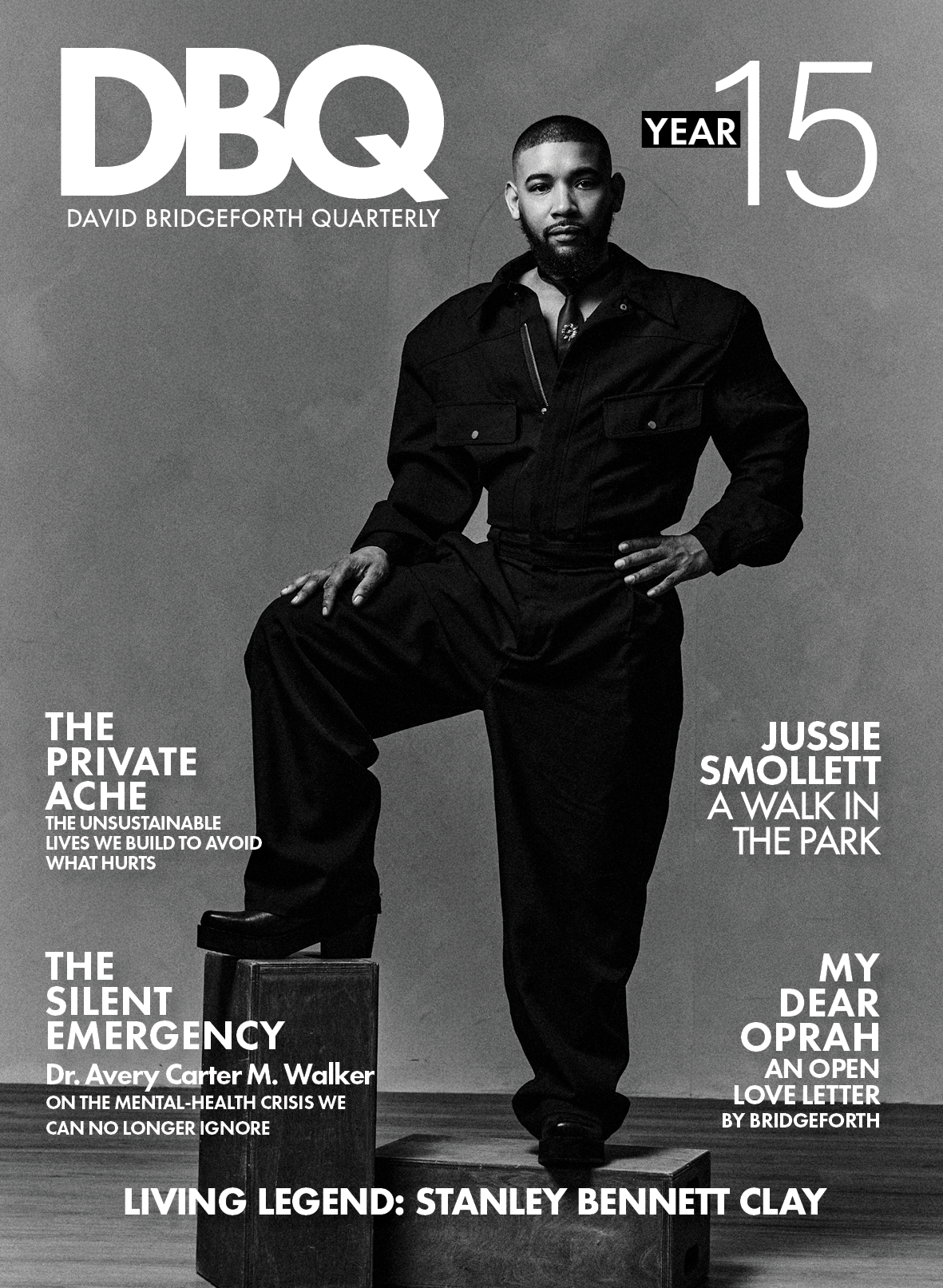
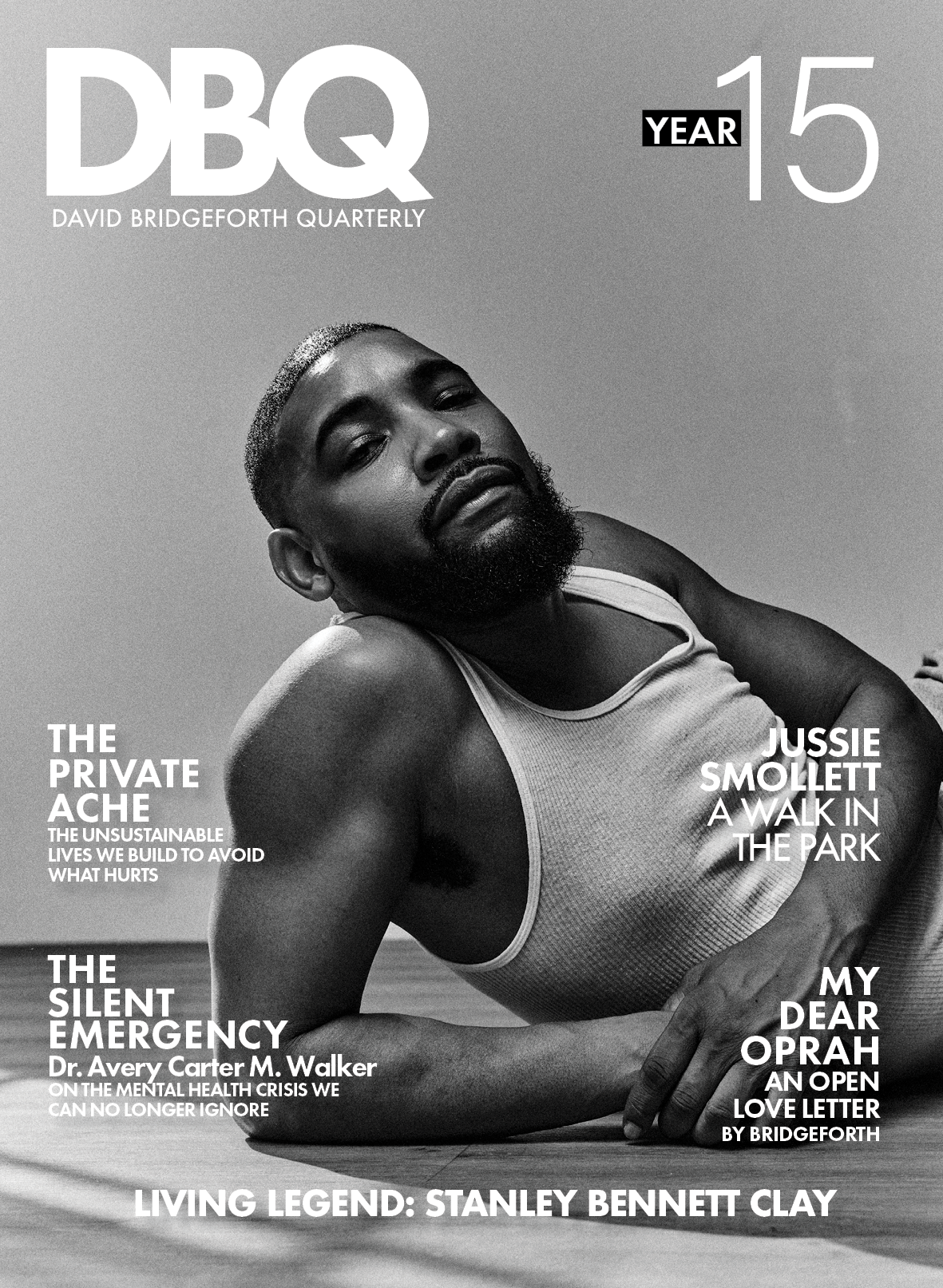
Welcome to DBQ. This publication, now entering it’s15th year was established to not only document the culture, experience, and work of LGBTQ+ people of color, but to affirm, celebrate and o garner visibility for community.
Fifteen years after its first issue, DBQ Magazine returns—not to revisit where we left off, but to begin again with everything time, survival, friendship, disappointment and purpose have taught us.
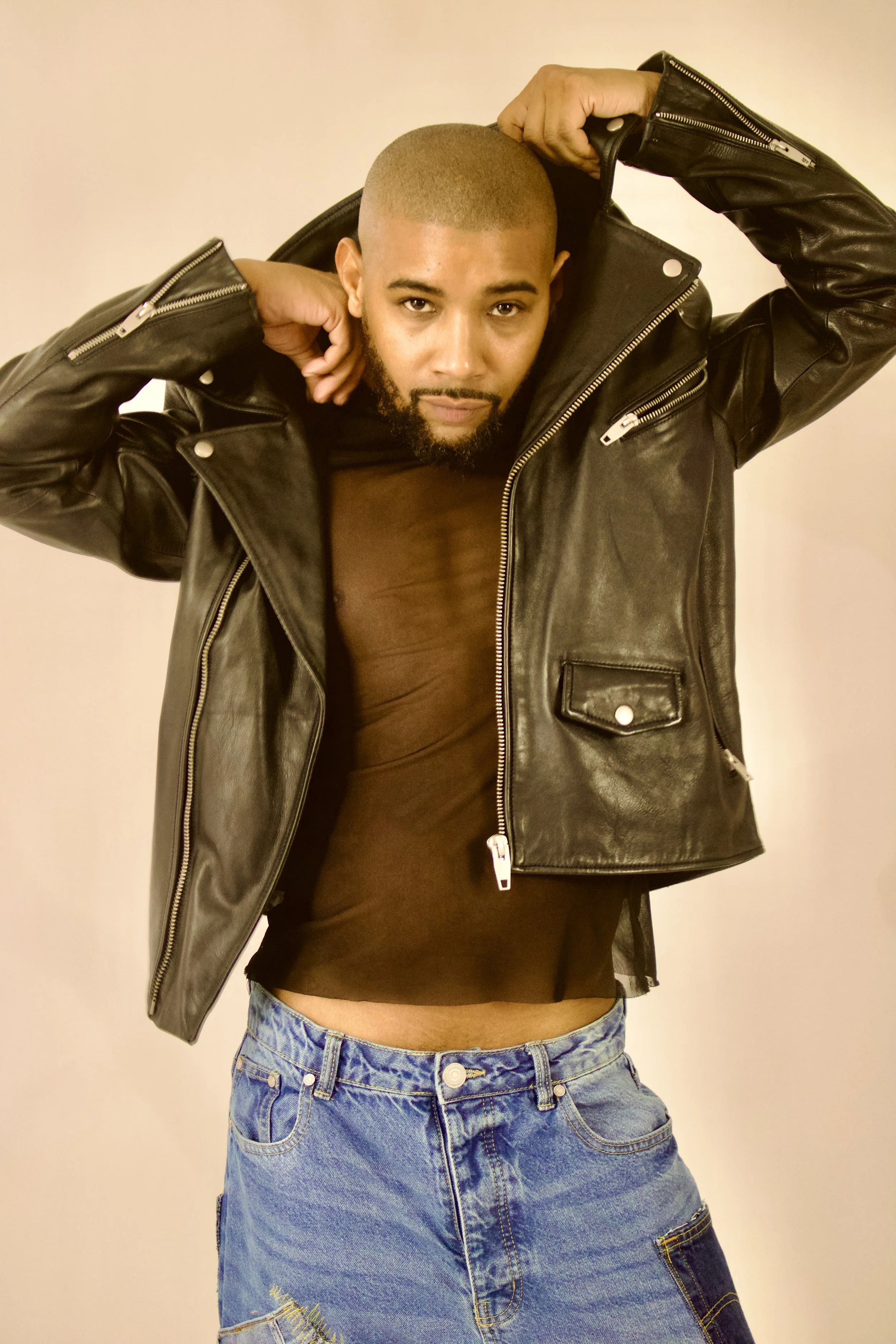
Founder, publisher and Editor-in-Chief Dave Bridgeforth appears across three commemorative Summer 2026 covers photographed by Eric Hart Jr, marking both the return of DBQ Magazine and Dave’s reintroduction into the public conversation.
Inside the issue, Dave joins actor, artist and advocate Jussie Smollett for A Walk in the Park—a deeply personal three-part video conversation accompanied by photographs of the two longtime friends walking together and speaking candidly about visibility, survival, creativity, public perception, friendship and the decision to keep moving forward.
This issue begins a new season for DBQ Magazine, told through film, photography, personal essays, cultural commentary and live conversation.
Over the coming days, the Summer Issue will unfold with:
Jussie Smollett: A Walk in the Park
A three-part video conversation with Dave Bridgeforth about identity, visibility, survival, creativity and moving forward.
The Private Ache
Dave Bridgeforth confronts the private pain and unsustainable lives we build to avoid what hurts.
The Silent Emergency
Dr. Avery Carter M. Walker examines the mental-health crisis too many Black gay men are carrying in silence.
Living Legend: Stanley Bennett Clay
An intimate conversation with the celebrated actor, director, playwright, author and longtime DBQ mentor.
DBQ Magazine
The 15th Anniversary Summer Issue
There are very few people who can honestly say they changed the direction of someone else’s life.
Stanley Bennett Clay changed mine.
Long before I became a publisher, Stanley was the writer who taught me how to write. He challenged me to think more deeply, to respect language, and to understand that writing wasn’t simply putting words on paper—it was an act of observation, discipline, honesty, and love.
When I first told him I wanted to create a magazine, Stanley refused to let me think small. He insisted that I publish it. He insisted it should carry my own name. He told me to call it David Bridgeforth Quarterly, to stand behind my work, and to have the courage to put myself on its covers. That publication would eventually become DBQ Magazine.
By the time evening comes, I have already been many people.
I have been the executive, the publisher, the director, the producer, the problem-solver, the friend, the person who answers, and the person expected to know what happens next. I move between responsibilities so often that the movement itself has become ordinary. One role ends, another begins, and I have learned how to hold them all.
Then comes the private hour—the point in the day when I no longer want to be useful.
There is a difference between having a sexual life and feeling controlled by one. That distinction matters, especially for Black gay men, whose sexuality has too often been judged, pathologized, fetishized, hidden, or discussed only through the lens of disease. Any serious conversation about compulsive sexual behaviors, internet sex, pornography, and emotional regulation must begin with care: pleasure is not pathology, desire is not dysfunction, and a high libido is not automatically a disorder.