

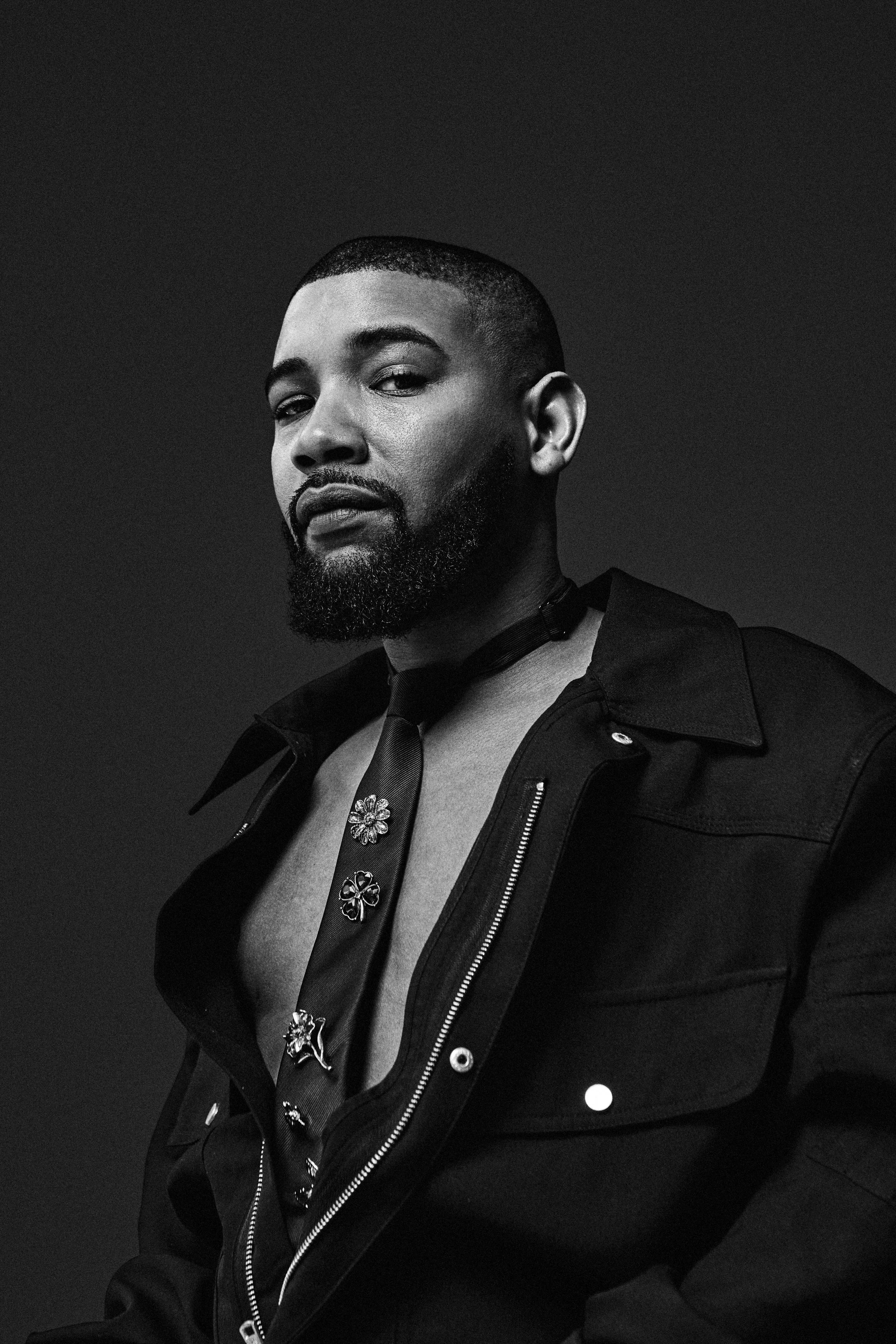
THE PRIVATE ACHE
The older I get, the more I notice how many people are holding themselves together with habits they do not fully question. Some call it pleasure. Some call it routine. Some call it comfort. I think we are living in a time of deep ache. Not just grief, not just stress, not just burnout, but ache that settles into the spirit, the body, the appetite, the habits, and the private rituals people build to get through the day.
What I’ve come to know is that everybody is carrying something. Some of it is personal. Some of it is political. Some of it is economic. Some of it is racial. Some of it is sexual. Some of it is inherited. Some of it is happening in the body itself. We are trying to survive a culture that exhausts us, a public life that keeps people on edge, an economy that keeps ordinary living under pressure, and systems that make wellness feel like a luxury instead of a basic human right. Even food has become part of the ache. Too many people are trying to nourish themselves in a system that offers cheap convenience, poor quality, chemical burden, and very little real care. People are tired, inflamed, under-rested, overworked, and calling it normal because normal has been distorted.
That is why I am less interested in whether people are aching than in what people are doing with the ache. That, to me, is the real question. Because human beings are skilled at renaming their sedations. We call things pleasure, reward, taste, adulthood, freedom, self-care, a little fun, taking the edge off, winding down, getting comfortable. We call it comfort, or a comfort zone, as though comfort itself were always innocent. But I learned young that comfort can be dangerous. Les Brown told me when I was a teenager that your comfort zone is your danger zone, and I have lived long enough now to understand exactly what he meant. Sometimes what we call comfort is simply a well-decorated way of avoiding ourselves.
I do not write that from a distance. I write it as someone who has had to look at his own appetites honestly. I write it as someone who has had to admit that some cravings are personal and some seem to arrive with your last name. I want to be careful with how I speak about family, but I will say this: I understand more now about inheritance than I used to. I understand that what gets passed down is not always money, property, wisdom, or love. Sometimes what gets passed down is a relationship to escape. Sometimes what gets passed down is a tolerance for excess. Sometimes what gets passed down is a habit of calling a thing normal because it has been normal around you for so long.
That truth became more real to me when I had to look at my own life plainly. There have been seasons when two bottles of Prosecco a night and seven blunts could pass as unwinding. Keep your judgement.They could pass as reward, as softness, as taking the pressure off, as getting into a comfortable space after a hard day. But eventually I had to ask a harder question. Was I enjoying my life, or was I trying not to feel it so fully? Was I choosing pleasure, or had I built a private system for dulling ache that I had simply learned to describe in flattering terms?
That is where this piece lives for me. Not in judgment, and not in confession for its own sake, but in inquiry. Because I know I am not alone in this. A lot of people are functioning well enough to avoid being questioned. They are working, producing, posting, laughing, showing up, making money, looking good, staying desirable, staying booked, staying busy. But functioning is not the same as being free. High-functioning pain is still pain. A beautiful life can still have a private dependency in it. A successful person can still be deeply unwell in ways that do not announce themselves publicly.
I also know this from watching. Over the past few years, while I was not on the cover, not centered in the image, not as visible in the ways some people were used to, I was given something else: a clearer view. When people are no longer looking at you as the face, they often forget you can still see. And I have seen a great deal. I have seen ache in mentors, leaders, colleagues, friends, acquaintances, public figures, celebrities, and people with impressive titles and carefully managed lives. I have seen how pain dresses itself in influence, in beauty, in wit, in access, in status, in busyness, in desirability. I have seen how often people who are admired are also privately unraveling. I have seen enough to know that suffering is not reserved for the obviously broken. Very often, it is living behind polish.
I think one of the most damaging lies of adulthood is that if you are still getting things done, then nothing is seriously wrong. But the body keeps telling the truth. The spirit does too. The truth comes out in irritability, in cravings, in exhaustion, in emotional distance, in compulsion, in loneliness, in the inability to sit quietly with yourself without reaching for something. Not everything that comforts us is kind to us. That applies to substances, but it also applies to work, to attention, to sex, to performance, to busyness, to all the little arrangements we make with ourselves so we do not have to fully face what hurts.
So when I say that we are all aching, I do not mean that as a slogan. I mean that many of us are carrying untreated pain while living inside systems that profit from our distraction, our depletion, and our dependency. I mean that people are trying to survive on bad food, thin hope, too little rest, too much fear, and private habits they do not always know how to interrupt. I mean that people have learned to romanticize survival because survival is what they have had. But surviving and healing are not the same thing, and coping and healing are not the same thing either.
That distinction matters to me now more than ever. It matters because there is no real freedom in being expertly managed by your cravings. It matters because there is no dignity in calling something harmless simply because it is common. It matters because many of us have inherited ways of soothing ourselves that may have made sense in one generation but are costing us too much in this one. It matters because truth is still the beginning of any serious healing. Not branding. Not performance. Not saying the right words about wellness.
What I’ve come to know is that this is part of why I have returned and have reintroduced myself back into the spotlight. Not to decorate our lives with language, but to press on the places that matter. Not to flatter our image, but tell the truth about what lives beneath it. And if I am writing more plainly now, it is because time, distance, and disappointment have sharpened my perception. I have been overlooked enough, left enough to the side, and made optional enough to see what I might not have seen had I still been standing at the center of the frame. I have seen the ache up close. In others and in myself. That is why I am writing this. Not because I have mastered anything, but because I know now that the question is not whether we hurt. The question is whether we are finally ready to tell the truth about what we use to comfort ourselves from it. The private ache is not what will undo us. It is the unsustainable life we build to avoid it.
— DAVE BRIDGEFORTH
PHOTO BY ERIC HART JR.
