

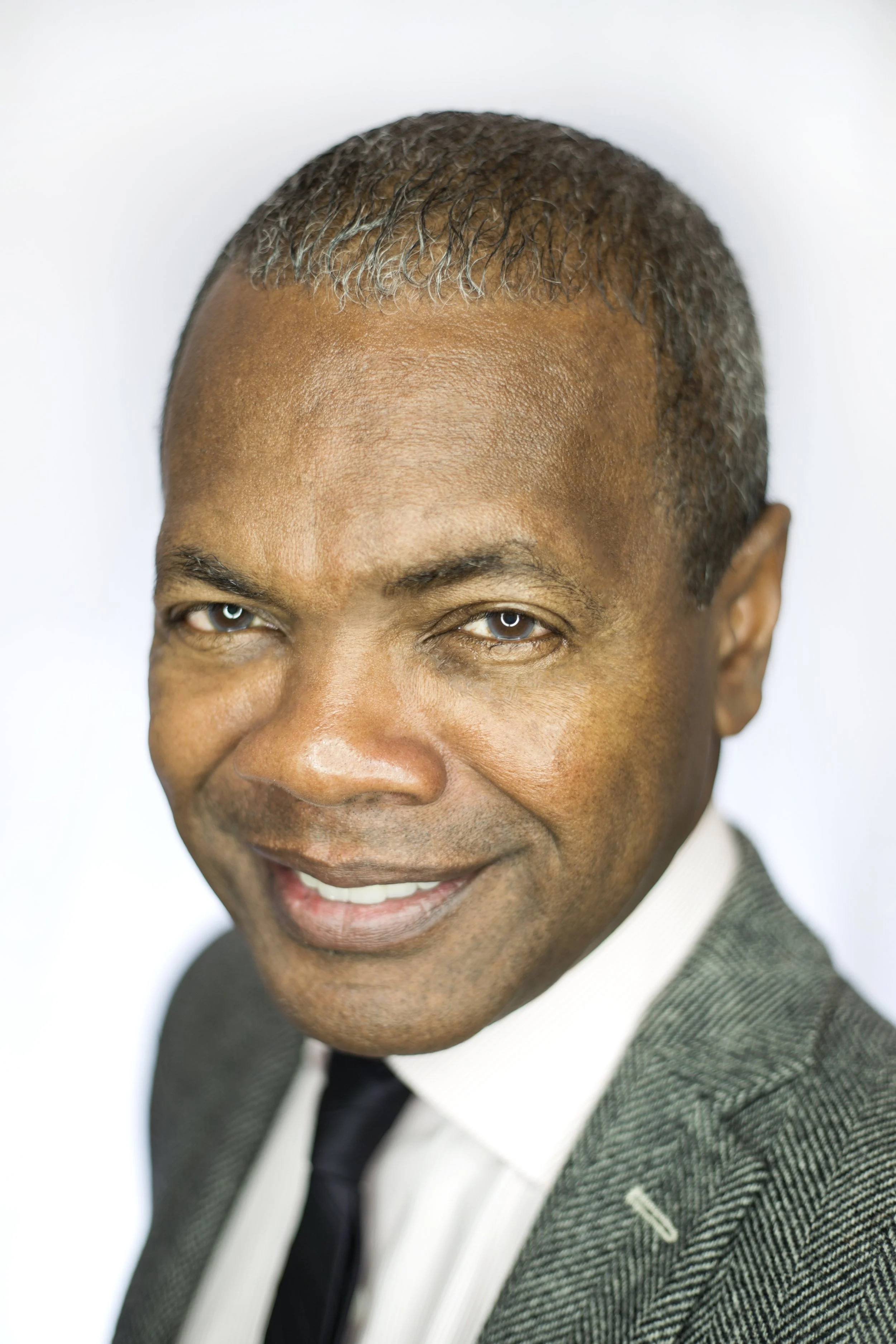
STANLEY BENNETT CLAY

LIVING LEGEND: Stanley Bennett Clay
DBQ Magazine, Summer 2026
Recorded January 2024
Published Summer 2026
“Every generation inherits stories. The question is whether someone chooses to preserve them.”
⸻
Introduction
There are very few people who can honestly say they changed the direction of someone else’s life.
Stanley Bennett Clay changed mine.
Long before I became a publisher, Stanley was the writer who taught me how to write. He challenged me to think more deeply, to respect language, and to understand that writing wasn’t simply putting words on paper—it was an act of observation, discipline, honesty, and love.
When I first told him I wanted to create a magazine, Stanley refused to let me think small. He insisted that I publish it. He insisted it should carry my own name. He told me to call it David Bridgeforth Quarterly, to stand behind my work, and to have the courage to put myself on its covers. That publication would eventually become DBQ Magazine.
His influence didn’t stop there.
For years, Stanley invested himself in this publication. He served as an editor, wrote reviews, essays, and original stories, challenged my ideas, sharpened my writing, and continually reminded me that the work always mattered more than the attention it received. He wasn’t simply contributing to a magazine. He was helping shape the publication it would become.
Somewhere along the way, mentor became father.
For more than five decades, Stanley Bennett Clay has worked across literature, publishing, theatre, television, and film as an actor, playwright, novelist, director, producer, editor, and publisher. His career encompasses more than 50 film and television appearances, alongside extensive voice and production work. He is the author of six novels—Diva, In Search of Pretty Young Black Men, Looker, Aching for It, Hollywood Flames, and Madame Frankie. Long before he encouraged me to become a publisher, Stanley had built a publishing legacy of his own. After serving as editor-in-chief of Black Beat, he became publisher and editor-in-chief of SBC Magazine, the national Black LGBTQ publication he published for ten years, from 1991 to 2001. His acclaimed play Ritual earned three NAACP Theatre Awards for writing, directing, and co-producing, and its film adaptation received a Pan African Film Festival Jury Award. His later work includes directing the stage adaptation of B-Boy Blues and creating You Are Not Alone, a documentary examining depression among Black gay men.
In January 2024, just months before his seventy-fourth birthday and before quietly stepping away from public life into a well-earned retirement, I sat down with Stanley in his home for what I knew would be an important conversation. At the time of this publication, Stanley is seventy-six years old.
We spent several hours talking about the artists who inspired him, the values that guided his life, the lessons he learned from his mother, his admiration for Sidney Poitier and Toni Morrison, his love of writing, and the kind of legacy he hopes to leave behind. Looking back now, I realize this wasn’t simply a conversation about an extraordinary career. It was a son asking his father the questions he never wanted to leave unasked.
It is my hope that these pages preserve not only Stanley Bennett Clay’s remarkable body of work, but also the wit, wisdom, humility, and humanity that shaped generations of artists—including me.
—David Bridgeforth
Publisher & Editor-in-Chief
DBQ Magazine
⸻
A Conversation Between Father and Son
Dave Bridgeforth:
I was watching clips from Good Times recently. I knew you had been on the show, but I couldn’t remember which character you played.
Stanley Bennett Clay:
(Laughing.)
The politician.
Dave Bridgeforth:
The politician.
When you look back over your career—everything you’ve written, everything you’ve acted in, everything you’ve created—what are you most proud of?
Stanley Bennett Clay:
That I’m breathing. (Laughter)
And that I’m still here.
When I think about my literary achievements and my artistic achievements, I’m proud of all of them because every project was an attempt to achieve something.
Sometimes it worked.
Sometimes it didn’t.
I’m proud of the failures too.
We’re not perfect people. If you’re an artist, sometimes you just… well… you drop a piece of shit on the canvas. People look at it and think, I don’t know about that.
That’s part of being an artist.
What you have to do is create.
You pray the audience likes what you’ve done, but more importantly, you have to create from your heart. That’s more important than trying to be a crowd pleaser.
If you’ve put your work out there—if you’ve put your heart out there—you hope people like it, but you’re proud that you believed in it enough to share it.
The beauty of being an artist is that there will always be people who are for you, and there will always be people who are against you.
That’s just the way it is.
Dave:
Can you share a pivotal moment that shaped your career?
SBC:
I really can’t point to one moment.
From the time I was a little boy, I was always observing things. Trees growing. Flowers blooming. The sky changing colors.
I couldn’t help but pick up a pencil and write about them.
I think we all notice those things.
The difference is that not everyone picks up the pen.
You wake up in the morning, look outside, and the sun has a different glow.
We admire it.
Writers write about it.
A writer says, The sun is smiling at me today.
And if the sun is smiling at me, maybe today is going to be a great day.
So I smile back.
That’s what writers do.
Dave:
Even though you acted and explored other creative pursuits, did you always know writing was your center?
SBC:
Writing was one of my many passions.
My mother used to laugh and say,
“Son, you want to do everything.”
She was right.
I’d see a banker and want to be a banker.
I’d watch actors on television and want to be an actor.
I’d want to play basketball.
I’d want to play rugby.
I’d want to fall in love.
I wanted to experience everything.
The beautiful thing about writing is that after you’ve lived those experiences, you don’t want to lose them.
So you write them down.
Eventually you realize…
Oh… I’m a writer.
You’ve been keeping track of your life all along.
One day you’ve written thousands of pages.
Those pages become books.
They become stories.
They become relationships.
They become the people you’ve loved, hated, admired and lost.
You simply put life onto paper.
Dave:
Who inspired you as a young actor?
SBC:
I stumbled onto being an actor.
That happened because, as a kid, I went to class pretending I was Sidney Poitier.
Whenever my drama teacher asked what play we wanted to perform, I’d always say Lilies of the Field.
Mind you, this was an all-white school with only a handful of Black students, and somehow I became the star of the school.
I only wanted to perform in plays Sidney Poitier had starred in.
I worshipped him.
Dave:
Did you ever get to meet him?
SBC:
I did.
I was so star-struck I had to pull myself together.
I belonged to a loop group—a group of professional actors who came in to record additional dialogue and voices for films. There would be ten or fifteen of us recording together under different directors.
One day Sidney Poitier walked in.
He was our director.
And it wasn’t just me who was shocked.
All of us were.
He was such a legend.
What fascinated me was seeing a superstar simply being himself.
When he was directing, he wasn’t Sidney Poitier the movie star.
He was just a man wearing blue jeans, a T-shirt and tennis shoes saying,
“Stan, let’s do that one again.”
“Try it this way.”
He became completely human.
That was wonderful to see.
Dave:
As a writer, who inspired you?
SBC:
I started writing at such a young age and became fascinated not just with writing, but with writers.
I wanted to study them.
I wanted to know where they came from.
If I loved someone’s book, I wanted to know everything about the person who wrote it.
After reading two or three of Toni Morrison’s books, I remember saying,
“Who is this diva?”
I wanted to know everything about her.
Then there was James Baldwin.
Lorraine Hansberry.
All these remarkable writers.
I wanted to discover their inner workings.
Their turmoil.
Their struggles.
Their triumphs.
Lorraine Hansberry especially.
She was such a brilliant writer.
She wrote A Raisin in the Sun and then cancer took her at only forty years old.
She should have lived to be one hundred and twenty.
Can you imagine everything else she would have written?
Those were the writers who inspired me.
They made me want to write.
Dave:
You’ve mentioned Toni Morrison a few times today. What was it about her?
SBC:
Toni Morrison always kept me in my place.
Whenever I’d start feeling a little too proud of myself…
I’d pick up Toni Morrison.
And she’d humble me.
I’d think,
“Oh… that’s how it’s done.”
She reminded me there was always another level.
Dave:
Are there specific values or principles that guide your decisions?
SBC:
Love thy neighbor as thyself.
That covers it all.
The most important thing is not to deliberately hurt another person.
One of the greatest feelings in the world is seeing someone smile.
One of the saddest things is seeing someone cry.
Humanity is such a beautiful thing.
Being human is hard.
It’s enlightening.
And it’s humbling.
God created a world full of wedding bells, children playing, families gathered around Thanksgiving tables.
Those are beautiful things.
The other thing is staying healthy.
I’ve got my fingers crossed.
I plan to live to be at least one hundred.
Dave:
Please do.
I need you here, Father.
SBC:
We should all be striving for that.
I’m not saying you have to become a fanatic about eating, but you do have to take care of yourself so you can enjoy the thrill of becoming a hundred-year-old dirty old man.
(Both laugh.)
Dave:
What lessons have you learned that you believe are universally valuable?
SBC:
Love yourself.
Take care of yourself.
Be proud of yourself.
And have some discipline within yourself.
If a man drops his wallet…
What’s the word I’m looking for?
Do you pick it up and put it in your pocket?
Dave:
Decency.
SBC:
Yes.
Decency.
We have to keep our decency.
That came from my mother.
She had eight children.
She loved being a mother.
Everyone came home for dinner.
Everyone held hands before the meal.
Everyone said grace.
She loved being a wife.
She loved being a mother.
She loved taking care of her family.
She’s ninety-seven years old now.
And she’s still the mother of the family.
She still runs everything.
Dave:
When this is all over—after the books, the plays, the acting, after the career—how do you hope Stanley Bennett Clay will be remembered?
SBC:
I hope I’m remembered well.
I feel lucky.
I feel blessed.
I’ve been able to write.
I’ve been able to act.
I’ve had adventures.
I’ve met extraordinary people.
I’ve lived a life that has given me more than I ever imagined.
If people remember me…
I simply hope they remember me well.
⸻
When the recorder was finally turned off, the conversation didn’t really end.
Stanley did what he had done for most of my life. He reached for another manuscript. Then another. He talked about stories he still hoped would find their way into the world, projects he wanted me to produce, people he believed I should collaborate with, and ideas he thought deserved another chance. Even in retirement, he was still thinking about the next story and encouraging the next storyteller.
Before I left, we stepped outside and made a few portraits together. Those photographs appear throughout this feature.
They’re among my favorite photographs we’ve ever taken—not because they’re perfect, but because they remind me of the afternoon itself.
I arrived hoping to preserve the life of a literary legend.
I left realizing I had preserved something even more meaningful.
A conversation with my father.